DRS 2027
UK Deposit Return Scheme 2027: what drinks buyers need to know
The October 2027 launch, the confirmed 20p refundable deposit and how to assess plant-based bottled water without confusing cash flow with cost.
By Win Win Water ·
Prepared from sources reviewed on 9 November 2026. Check current scheme guidance before making commercial decisions.
What is changing on 1 October 2027?
The Deposit Return Scheme is planned to start on 1 October 2027 in England, Scotland and Northern Ireland. Customers pay a deposit on eligible single-use drinks containers and get it back when they return the empty container. The policy is intended to reduce litter and collect material for recycling, not to increase a producer's profit.
The published scope covers containers from 150 ml to 3 litres made wholly or mainly from PET plastic, aluminium or steel. A conventional single-use 500 ml PET water bottle falls within those material and size criteria. Wales has its own policy process: businesses supplying there should check Welsh guidance separately. Sources: GOV.UK responsibilities and policy statement.
The deposit is 20p—and refundable
Exchange for Change's flat 20p launch deposit was reported by the Food & Drink Federation in April 2026. That deposit is separate from the drink price. It should not be described as an extra 20p of production cost, tax or gross profit.
The published guidance says everyone in the supply chain must charge the deposit to buyers when selling filled, in-scope containers. That makes the timing of payments and receipts relevant to distributors and retailers as well as shoppers. Source: Food & Drink Federation deposit announcement and GOV.UK responsibilities.
Where an alternative bottle can fit
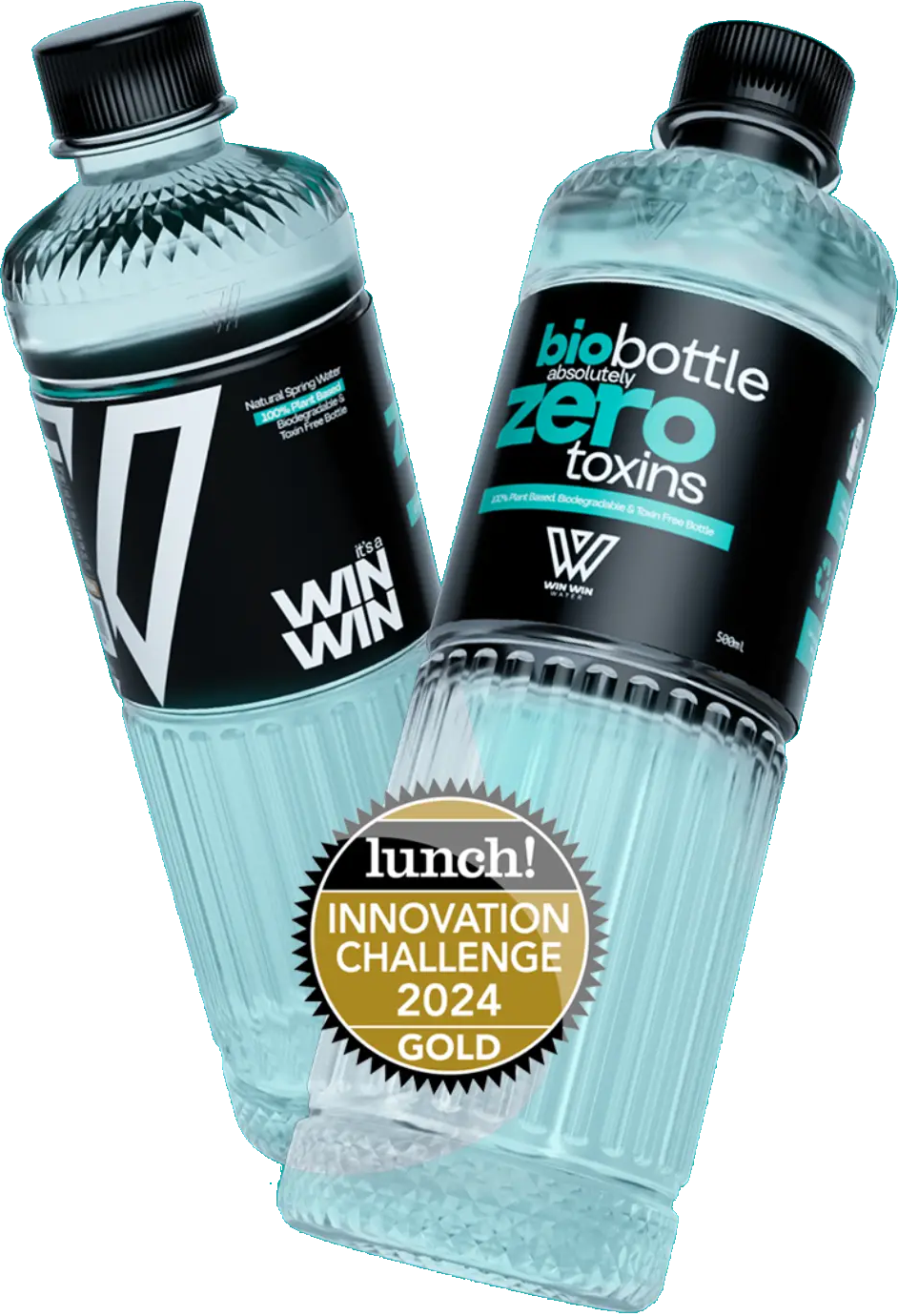
Win Win Water combines a plant-based bottle with single-source Cornish spring water. For a business reviewing its water range before DRS, this offers a distinct material and product proposition through branded supply, white label or the preform platform.
Plant-based is not a legal exemption category: some plastics can be plant-derived and still fall within PET scope. Confirm the complete container's composition and its treatment with the scheme operator or a qualified adviser before assuming no deposit applies to a specific product.
Compare cash outlay and margin separately
At a drink price of 20p, an in-scope bottle would involve 40p upfront once the 20p refundable deposit is added. If a genuinely out-of-scope alternative sold at 32p, it would involve 32p upfront: an 8p difference in initial cash outlay in this illustration, not an 8p permanent saving after refunds.
Those prices are examples, not Win Win Water retail offers. A retailer's buying price, a bottler's selling price and an RRP are different numbers. Compare equivalent stages of the supply chain, include actual costs and deposits, and confirm material scope before making a purchasing decision.
A practical next step
Ask for product specifications, evidence of material composition, a supply quotation and disposal requirements. Then compare the total operational case rather than the deposit alone. Our team can discuss the branded, own-label and preform routes without treating DRS as a blanket promise of cheaper production.