Why choose us
Glass, cans, cartons or recycled plastic — we've read the same reports you have
Every packaging format on the market has a sustainability story and most of them are partly true. This page sets our plant-based, industrially compostable bottle against each alternative, criterion by criterion, including where the alternatives beat us.
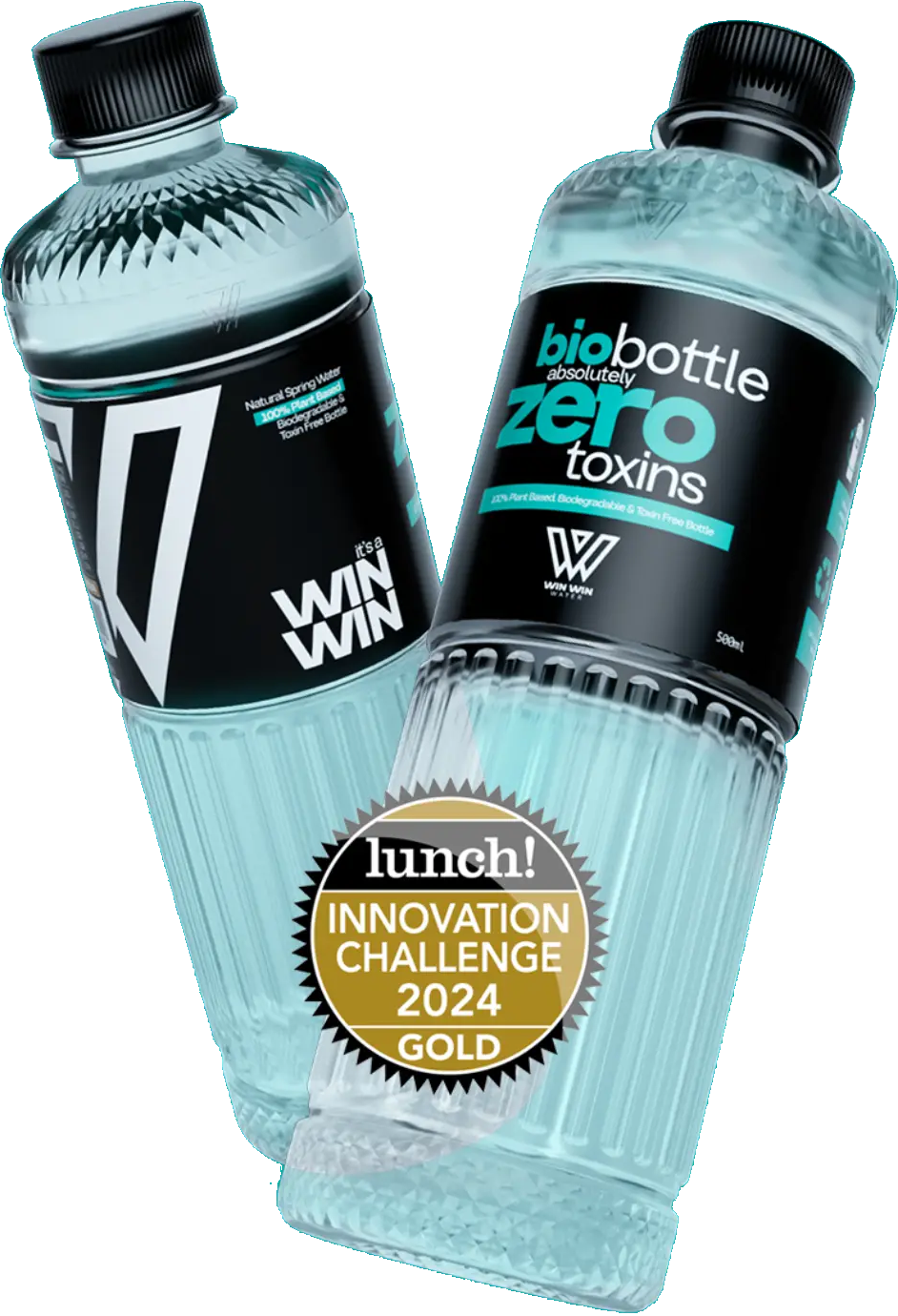
The short version
Three things no other format on this page manages at the same time
Plant-derived rather than fossil-derived. Certified for managed industrial composting. No persistent fossil-plastic residue by design. Glass, cans, cartons and rPET each manage one or two of those at best — never all three.
- Bottle material
- Plant-derived polymer
- End-of-life route
- Managed industrial composting
- Home compostable
- No
- Virgin petrochemical in the bottle
- None
- Bio-based content standard
- EN 16785-1
- Certificates & test reports
- Issued on request
Format by format
The comparison table, with the awkward rows left in
Eight criteria a procurement, finance or ESG team will actually be asked about. Where an alternative genuinely wins, it's marked as a win.
Carbon position of the container
Emissions attributable to producing the container itself, before freight. We hold supplier carbon documentation for the bottle material and issue it on request.
- Win Win (compostable)
- Documented, plant-derived material
- Recycled plastic (rPET)
- ~80g CO₂ per bottle
- Glass
- Highest of all formats — furnace heat + weight
- Aluminium cans
- Bauxite mining + 750°C remelt
- Cartons
- Multi-layer board, foil and polymer
Compostable
Breaks down under managed industrial composting rather than persisting as packaging. Not home compostable.
- Win Win (compostable)
- Certified for industrial composting
- Recycled plastic (rPET)
- ~450 years as PET
- Glass
- Inert, effectively permanent
- Aluminium cans
- Metal, not compostable
- Cartons
- Polyethylene layers persist
Microplastic free
Whether the container sheds persistent plastic fragments through its life and end of life.
- Win Win (compostable)
- No fossil-plastic residue by design
- Recycled plastic (rPET)
- Sheds microplastics as it degrades
- Glass
- Glass itself, yes — plastic closures aside
- Aluminium cans
- Internal polymer liner
- Cartons
- Polyethylene liners fragment
No petrochemical feedstock
Virgin fossil material required to make the container.
- Win Win (compostable)
- No virgin petrochemical
- Recycled plastic (rPET)
- Recycled, but still fossil-derived polymer
- Glass
- Silica-based
- Aluminium cans
- Mined bauxite plus polymer liner
- Cartons
- 4 polyethylene layers
Works in kerbside UK waste today
How realistically the format is actually processed, not how recyclable it is in theory. PLA is not collected in every UK kerbside scheme.
- Win Win (compostable)
- Industrial composting where available
- Recycled plastic (rPET)
- Widely collected
- Glass
- Widely collected, heavy to haul
- Aluminium cans
- Collected, energy-intensive to reprocess
- Cartons
- Only ~40% of UK cartons are recycled
Closed loop — becomes the same thing again
Whether the material can genuinely re-enter its own supply chain.
- Win Win (compostable)
- Compost or re-melt where accepted
- Recycled plastic (rPET)
- Bottle to bottle
- Glass
- Bottle to bottle
- Aluminium cans
- Can to can, at high heat
- Cartons
- Cannot be made into new cartons
Light for freight and handling
Weight drives fuel burn, pallet economics and manual-handling risk on site.
- Win Win (compostable)
- PET-equivalent weight
- Recycled plastic (rPET)
- Light
- Glass
- Multiples of the weight per litre
- Aluminium cans
- Light but easily damaged
- Cartons
- Light, poor stacking strength
Suits grab-and-go and event volume
Resealable, crush-resistant, safe in crowds and behind a counter.
- Win Win (compostable)
- Resealable, stadium-safe
- Recycled plastic (rPET)
- Resealable
- Glass
- Banned in most stadium environments
- Aluminium cans
- Not resealable
- Cartons
- Resealable, less premium at the counter
Our take on each alternative
Where each format's argument holds — and where it stops
Written to be forwarded. If a buyer is being told cartons or cans are the responsible switch, this is the counter-argument in full.
Recycled plastic (rPET) — better than virgin, still plastic
We agree with the argument that recycled plastic beats new plastic. Creating demand for rPET does pull value back into UK collection infrastructure. But rPET is still a fossil-derived polymer that persists for centuries if it escapes the system, sheds microplastics as it weathers, and carries roughly 80g of CO₂ per bottle. It is the least-bad version of the old answer. Our preform is a different answer: plant-derived rather than virgin petrochemical, and certified to break down under managed industrial composting instead of persisting for centuries in the ground.
Glass — beautiful on a table, brutal on a footprint
Glass is genuinely closed-loop and inert, which is why we have no argument with it on a restaurant table. The problem is everything around it: furnace temperatures to make and remake it, several times the weight per litre through your freight network, breakage on site, and a straightforward ban in most stadium and festival environments. For anyone moving volume, glass buys provenance optics at a real carbon and handling cost.
Aluminium cans — recyclable is not the same as low impact
Cans recycle well and repeatedly. Getting the aluminium in the first place does not: bauxite is mined, with the metal contamination, air and water pollution that mining brings to the communities around it. There also simply aren't enough cans in circulation to replace bottles, so a switch means producing new ones. Recycling them means shredding, burning off the old print, then a furnace at around 750°C — heat, and therefore emissions, that plastic-stream recycling only incurs once. And a can doesn't reseal, which rules it out for most of the accounts we supply.
Cartons — the most confident claim with the least behind it
A carton looks like paper and is largely not. Typical construction is paperboard plus aluminium foil plus several polyethylene layers, and separating those is the whole difficulty. Only around 40% of UK cartons are actually recycled, and even then the board becomes paper while the foil and polymer go off to the cement industry. Nothing becomes a new carton — so raw material is pulled in again every cycle. Of all four alternatives, this is the one where the on-pack sustainability message and the material reality are furthest apart.
What we don't claim
The limits, stated before you ask
Trade buyers are sceptical for good reason. Being straight about the boundaries is what makes the rest of this page credible.
Our bottle is designed and certified for managed industrial composting conditions. It is not home compostable, it is not a licence to litter, and appropriate disposal infrastructure is required.
We don't claim to be a carbon-neutral company. Where we describe the carbon position of the bottle material we mean the production-stage documentation our supplier provides, and we will send it to you.
Where independent testing is still running, figures stay marked as to be confirmed until the result is in our hands.
Want this comparison as a document for your buyer?
The spec pack includes the format comparison, mineral analysis and degradation testing references in one PDF.